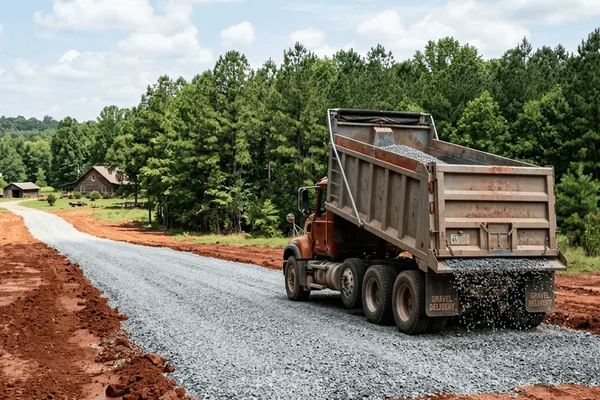
When Your Driveway Won't Hold Gravel, We Fix It Right
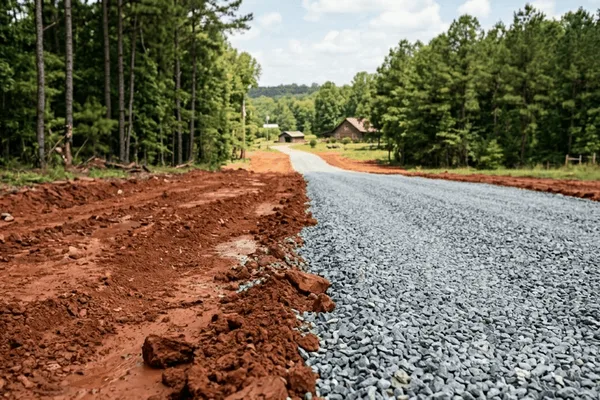
Red clay does two things to unpaved driveways: it swallows surface gravel whole, and it turns wheel tracks into rivers after rain. Our team builds and repairs rural driveways throughout the region — using the right base materials so your surface holds for years, not seasons.
How much does gravel driveway installation cost in Gray Jones County?
Gravel driveway installation in Gray and Jones County typically costs $8–$18 per linear foot, depending on length and base requirements. Red clay soil throughout the region requires a proper crusher run base and geotextile fabric to prevent surface gravel from sinking. Most project costs are quoted after a site inspection within 24 hours.
$8–$18
Per Linear Foot — New Installation
200–800 ft
Typical Rural Driveway Project
6
Services Available
Local
Serving Jones County & Middle Georgia
What We Do
Professional Driveway Services for Rural Properties
Whether you're building from raw land, repairing washout damage, or restoring a driveway that's been neglected for years — our team handles the full scope, from site prep to final grading.
New Driveway Installation
Complete ground-up construction: subgrade preparation, geotextile fabric, crusher run base layer, and surface gravel sized for your property and traffic load.
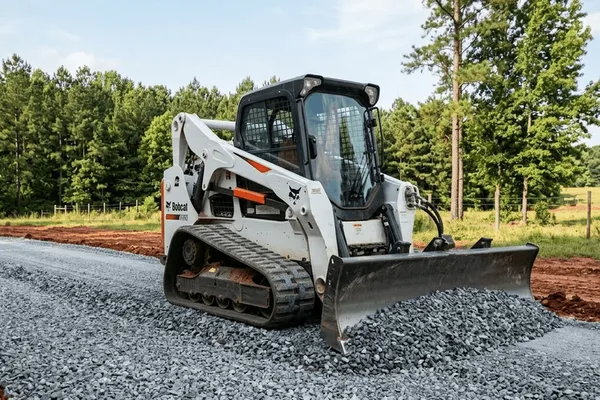
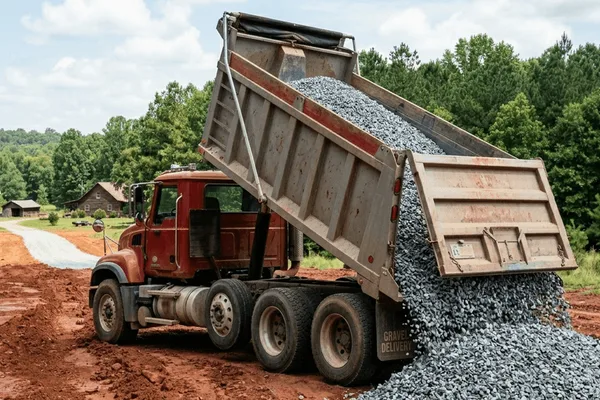
Crusher run, #57 stone, and related aggregates delivered and machine-spread. Top-dressing for driveways that need fresh surface without full reconstruction.
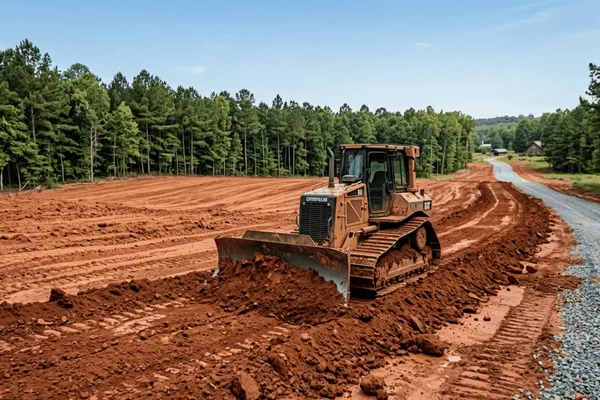
Site preparation for new driveway access on raw or cleared land. Proper grading before gravel goes down is what separates a driveway that lasts from one that fails early.
Two things separate a driveway that holds for a decade from one that fails within two seasons: a proper crusher run base on geotextile fabric, and a crowned surface that channels rain off both edges. Without both, surface gravel sinks into clay no matter how much you add. We build driveways the right way from the start — and repair the ones that weren't.
Why Gravel Driveways Work in Middle Georgia
Red Clay & What It Does to Unpaved Driveways
Middle Georgia sits in a red clay belt. Rural properties throughout this area share the same problem: unpaved driveways that become impassable after heavy rain, develop deep ruts, and wash out on moderate slopes.
A properly built gravel driveway solves all three. Crusher run — dense, angular gravel that compacts tightly into clay — forms the base. A surface layer of #57 stone provides traction and drainage. The driveway is crowned so rainwater sheets off both edges rather than pooling in wheel tracks.
Without proper base prep and crown grading, even quality gravel migrates within two seasons. We build driveways that hold through middle Georgia weather — and repair ones that were not built right the first time.
Signs Your Driveway Needs Professional Attention
Potholes or ruts that return within a season of filling
Gravel washing to the ditch line after every heavy rain
Standing water in wheel tracks after moderate rainfall
Soft spots or visible gravel sinking into clay subgrade
Washboarding across the full driveway width
Surface level lower than the surrounding yard edge
What Goes Into a Lasting Gravel Driveway
Geotextile Fabric BaseSeparates clay subgrade from gravel — prevents base stone from sinking into red clay over time.
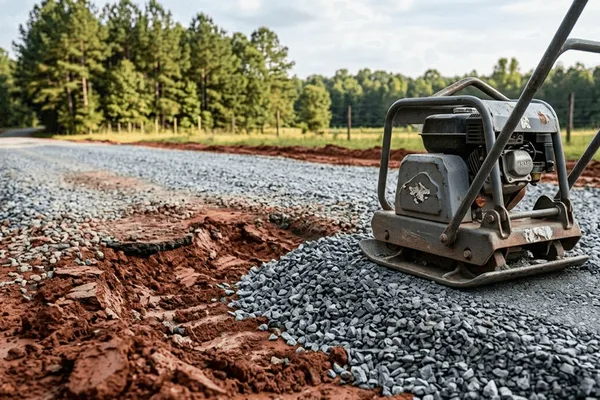
Crusher Run Base LayerCompacted to form a firm, load-bearing base — the standard for rural driveways handling truck and equipment traffic.
Proper Crown GradingA center crown channels rain to ditch lines — the single most common reason gravel driveways deteriorate prematurely.
Periodic Top-DressingGeorgia driveways benefit from fresh aggregate every 2–3 years to restore surface depth and correct minor settling.
Common Questions
Driveway FAQ — Common Questions Answered
Real answers for rural property owners in middle Georgia.
How much does a gravel driveway cost?
In Jones County, Georgia, gravel driveway installation typically costs between $8 and $18 per linear foot for a standard residential driveway. A full rural gravel driveway of 200–500 feet commonly runs $2,000–$8,000 all-in, depending on driveway length, base condition, and the type of gravel selected. Pothole and rut repair is generally $200–$800 for targeted work, while full gravel driveway resurfacing runs $1,000–$4,000 depending on length. These ranges reflect current middle Georgia market rates — request a free quote for a site-specific estimate.
What is the best gravel for a driveway?
For middle Georgia gravel driveways, crusher run (also called processed gravel or road base) is the preferred base material because its angular particles compact tightly into the red clay subgrade. For the surface layer, #57 crushed stone provides good drainage and traction underfoot and under vehicle tires. Pea gravel, while attractive, is too round and tends to migrate quickly on rural driveways in Gray, GA with vehicle traffic. The right material depends on your driveway length, slope, and expected traffic load — we'll recommend the correct spec during your quote.
How deep should a gravel driveway be?
A properly built gravel driveway in Jones County should have a total gravel depth of 6–8 inches — typically a 4-inch compacted crusher run base and a 2–4 inch surface layer of #57 stone. On soft or wet ground, geotextile fabric placed beneath the base layer prevents gravel from sinking into the clay subgrade over time. Driveways that handle heavy equipment (loaded dump trucks, tractors) may need a deeper base layer of 6 inches or more to avoid base failure under load.
What is crusher run and is it good for driveways?
Crusher run is a blend of crushed stone and stone dust produced when larger stone is processed at a quarry. Because it contains both angular chunks and fine material, it compacts into a dense, stable surface that binds together under traffic. This makes it the ideal crusher run driveway base material in middle Georgia — it locks into clay subgrade better than uniform gravel sizes and resists rutting from vehicle loads. Crusher run is the standard base for new gravel driveway installations throughout Jones County, Georgia.
How do you fix potholes in a gravel driveway?
In Jones County, Georgia, effective gravel driveway pothole repair starts by diagnosing the cause — most potholes result from base failure, not just surface wear. Simply filling a pothole without addressing the base will produce the same hole within one season. Proper repair involves removing loose material, compacting the subbase if it has softened, adding crusher run base material, compacting in lifts, and finishing with surface gravel matched to the existing driveway. A free quote visit will identify whether your gravel driveway needs targeted pothole repair or a broader restoration.
How do you stop gravel driveway erosion?
Gravel driveway erosion in Jones County is most often caused by two things: inadequate crown grading that lets water channel down the center rather than sheeting off to the sides, and the absence of proper drainage swales at the driveway edges. Correcting erosion requires regrading to restore the center crown, re-establishing ditch lines, and adding or replacing gravel that has washed away. On sloped driveways, cross-culverts or water bars may also be needed to interrupt downhill water flow. Annual inspection and top-dressing every 2–3 years prevents most erosion from developing into serious washout.
Is a gravel driveway cheaper than concrete?
Yes — significantly. Concrete driveways in middle Georgia typically cost $6–$12 per square foot installed, making a 500-foot rural driveway (at standard 12-foot width) a $36,000–$72,000 project. A comparable gravel driveway in Gray, GA runs $8–$18 per linear foot all-in, or roughly $4,000–$9,000 for the same length. A residential gravel driveway also handles heavy equipment loading without cracking — a practical advantage on rural Jones County properties that see farm equipment, loaded trailers, and delivery trucks. The trade-off is periodic gravel driveway maintenance (regrading and top-dressing) that concrete does not require.
Is a gravel driveway better than asphalt?
For rural properties in Jones County, Georgia, a gravel driveway is often a better fit than asphalt. Gravel driveway installation runs $8 to $18 per linear foot, while asphalt typically costs $20 to $30 per linear foot installed — significantly more for a 300 to 800 foot rural driveway. A gravel driveway also handles heavy loads (farm equipment, loaded trailers) without cracking, drains naturally rather than routing water to the edges, and is straightforward to repair when damaged. Asphalt performs well on shorter residential driveways with light vehicle traffic and looks more finished, but cracks in Georgia's heat-and-freeze cycle and costs more to resurface. For long rural access roads on Jones County properties, gravel is the practical and cost-effective choice.
What are the pros and cons of asphalt millings vs gravel?
Asphalt millings (recycled asphalt product) are sometimes used as a lower-cost driveway surface in Georgia. They compact well and bind slightly in heat, creating a firmer surface than loose gravel. However, asphalt millings have real limitations on Jones County gravel driveways: they can become sticky and soft in Georgia's summer heat, don't drain as cleanly as crusher run or #57 stone, and are harder to regrade when crown drainage fails. Fresh crusher run is the more predictable and better-draining choice for most rural gravel driveways in Jones County — it compacts firmly, bonds to the subgrade, and holds crown grading better over time. Asphalt millings can make sense when cost is the primary constraint and the driveway is short and relatively flat.
How long does a gravel driveway last?
In Jones County, Georgia, a properly built gravel driveway lasts indefinitely with routine maintenance. The base layer, when correctly installed on geotextile fabric with adequate compaction, does not need replacement — only the surface layer requires periodic replenishment. Most rural gravel driveways in middle Georgia benefit from a top-dressing of fresh aggregate every 2–3 years and a regrading pass every 3–5 years to restore crown drainage. Driveways that receive no maintenance deteriorate within 5–10 years regardless of initial installation quality.
Who installs gravel driveways near me?
In Gray and Jones County, Georgia, Gray Gravel connects residential and rural property owners with qualified local gravel contractors throughout the county — including Gray, Haddock, and Round Oak. Submit a free quote request and a local provider will follow up to schedule an on-site estimate.
Can a gravel driveway be plowed?
In Jones County, Georgia, gravel driveways can be plowed, but with caveats. Jones County averages very few snow events per year, so snow removal is rarely a concern. For clearing storm washout material, a box blade or bucket loader works well on gravel without displacing aggregate — provided the operator keeps blade height above the gravel surface. Aggressive plowing will pull gravel from the surface. For the occasional Georgia ice event, sand spread over the surface provides traction without damaging the base.
How do you fix ruts in a gravel driveway?
In Jones County, Georgia, gravel driveway ruts form when the gravel surface shifts laterally under vehicle weight — usually because the base has softened or the crown has flattened. Surface-only repair (pushing gravel back into the rut) fails within a season. Permanent repair requires compacting the subbase, adding crusher run base material if needed, and regrading to restore the crown so water drains away from the wheel track area. Driveways with recurring ruts in the same location typically have a base drainage problem that surface patching alone will not fix.
How wide should a gravel driveway be?
A standard single-lane residential driveway in Jones County is 10–12 feet wide — enough for a passenger vehicle with clearance from the soft shoulder. Rural driveways that accommodate farm equipment, loaded dump trucks, or two passing vehicles should be 14–16 feet wide. Turnarounds, parking areas, and equipment staging spots require additional width that should be graded and graveled at the same time as the main driveway run.
What size gravel is best for a driveway?
The best material approach for Jones County driveways uses two sizes: #57 crushed stone (approximately 3/4 inch) for the surface layer and crusher run for the base. #57 stone is large enough to stay put on a properly graded driveway and provides a stable, even driving surface. Crusher run contains angular particles from 1.5 inches down to dust — what makes it compact into a dense, load-bearing base that locks into red clay subgrade. Pea gravel (smooth, rounded) is the worst choice for driveways — it rolls under tires and displaces constantly.
Does a gravel driveway need a base layer?
Yes — in Jones County, Georgia, a gravel driveway without a proper base layer will fail within a few years regardless of how much surface gravel is applied. Jones County's red clay subgrade swells when wet and contracts when dry, causing surface gravel to sink and migrate without a stable base to separate the two materials. A 4-inch compacted crusher run base on geotextile fabric is the minimum standard for any gravel driveway in Gray, GA. Driveways on soft ground or those that handle heavy equipment require a deeper base of 6 inches or more.
What are the pros and cons of a gravel driveway?
For rural property owners in Jones County, the main advantages of a gravel driveway are: significantly lower installation cost than concrete or asphalt, good drainage performance on rural properties, and the ability to handle heavy farm and construction equipment without cracking. The main disadvantages are: periodic maintenance requirements (regrading and top-dressing every 2–3 years), gravel displacement on sloped sections, and muddy edges during heavy Georgia rain seasons. For rural Jones County properties with long driveways, the cost difference versus concrete typically makes a residential gravel driveway the only practical option.
How do you keep gravel from washing away on a driveway?
Gravel washes away from a gravel driveway when crown grading has flattened — causing water to channel down the center rather than sheet off the edges — and when drainage ditches along the sides have silted in. This is especially common in Jones County after heavy spring and summer rain events. The fix is regrading to restore the center crown, re-digging ditch lines, and adding fresh surface gravel. On slopes steeper than 8%, cross-culverts cut across the driveway at intervals to interrupt downhill water flow before it gains velocity. Most washout problems can be prevented with annual inspection and a light top-dressing every 2–3 years.
How often does a gravel driveway need to be regraded?
In Jones County, Georgia, most rural gravel driveways benefit from a regrading pass every 3–5 years under normal use. Driveways with heavy daily traffic, steep grades, or seasonal flooding may need regrading every 2–3 years. Early signs that gravel driveway regrading is overdue: water channeling in the center instead of draining to the sides, washboarding across the wheel track width, and visible low spots that no longer drain after rain. Regrading is far less expensive than letting a gravel driveway deteriorate to the point where base repair or full restoration is needed.
Can you install a gravel driveway on a slope?
Yes — in Jones County, Georgia, gravel driveways are regularly installed on sloped terrain, but grade affects the design. Slopes up to about 8–10% can be handled with standard crusher run base and correct crown grading. Steeper slopes require additional drainage infrastructure — cross-culverts, water bars, or French drains along the driveway edges — to prevent washout. Very steep grades above 15% may require a different surface material. A free quote includes a slope evaluation so you know what your gravel driveway terrain actually requires.
How much gravel do I need for a driveway?
A standard 200-foot residential driveway in Jones County (12 feet wide, 4-inch surface layer) requires approximately 30–35 tons of #57 stone for the surface. The crusher run base layer for the same dimensions requires another 30–35 tons. For longer rural driveways of 400–600 feet, plan on 60–70 tons per material layer. Actual quantities depend on your driveway width, existing base condition, and how much material is already present — we calculate exact requirements during a quote visit and include delivery in the project price.
What is the difference between #57 stone and crusher run?
#57 stone and crusher run serve different roles in a Jones County driveway. #57 stone is a clean, uniformly-sized crushed stone (approximately 3/4 inch) with no fines — it provides good drainage and a stable driving surface but does not compact into a solid mass. Crusher run is a blend of angular stone and stone dust produced during crushing — the dust and fines fill the voids between larger particles and compact into a dense, load-bearing base. A correctly built gravel driveway uses crusher run as the base layer and #57 stone (or similar clean aggregate) as the surface layer.
How long does gravel driveway installation take?
Most residential gravel driveway installations in Jones County are completed in one to two days. A straightforward 200-foot gravel driveway on cleared land with firm subbase can be finished in a single day — base prep, geotextile fabric, and surface gravel all in one visit. Longer rural driveways of 400–800 feet, or driveways requiring significant site grading, drainage work, or culvert installation, typically run two to three days. Weather and site access affect the schedule; a free property assessment will produce a realistic timeline for your specific project.
What is the best gravel for red clay soil in Georgia?
Crusher run is the best base material for gravel driveways on Georgia red clay soil. Its blend of angular crushed stone and stone dust compacts into a dense layer that bonds with the clay subgrade and resists the heaving and shifting that wet clay causes. Jones County's red clay swells when saturated and contracts when dry — a properly compacted crusher run base on geotextile fabric separates the gravel driveway from the clay and prevents gravel from sinking into the subgrade over time. For the surface layer of a long driveway gravel installation, #57 stone provides drainage and a stable driving surface that stays put over the base.
Do I need to clear land before installing a gravel driveway?
Yes — the driveway path must be cleared of trees, stumps, brush, and debris before gravel installation can begin. On raw land in Jones County, that typically means land clearing and grubbing along the full driveway route before any grading or gravel work starts. Stumps left in the ground will rot and create soft spots that destabilize the base over time. Gray Land Clearing serves Jones County and can clear and grub a driveway path before the gravel crew arrives — the two scopes are often scheduled back-to-back on new rural property development projects.
Can you install a gravel driveway on a rural farm road or long access road?
Gray Gravel installs gravel driveways on rural farm roads and long property access roads throughout Jones County — gravel driveways of 300 to 800 feet or more are common on rural Georgia properties and are handled the same way as residential gravel driveways, but priced per linear foot with attention to drainage across the full run. Many farm properties in Jones County have existing dirt roads that need conversion to a stable gravel driveway surface to handle equipment loads year-round. This work includes regrading the road base, establishing crown and ditch drainage, and applying crusher run base followed by surface gravel. Contact Gray Gravel — your local gravel driveway company in Gray, GA — for a free site assessment on any farm road or rural access road project.
Many rural properties in Jones County need more than just a driveway — they need the full picture of rural infrastructure built out together. If your property also requires a new septic system, Gray Septic serves Jones County property owners with the same rural middle Georgia focus.